
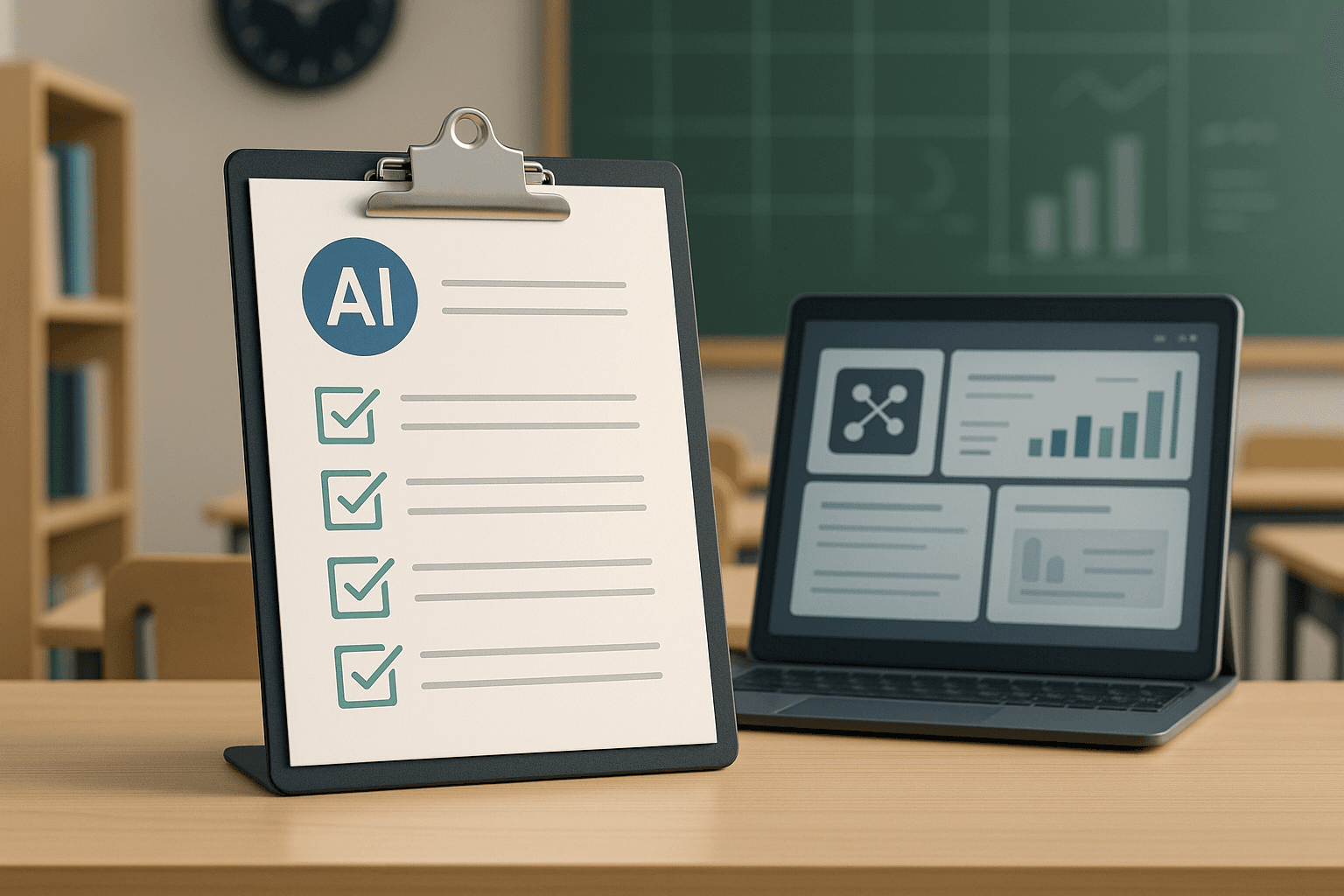
A school AI policy should not be a document that sits unread in a folder. It should give teachers, students, parents, and administrators clear guidance on how AI tools may be used, where they are restricted, and how learning integrity will be protected.
The policy must be practical. If it is too vague, teachers will interpret it differently. If it is too strict, students may hide AI use. If it ignores privacy, the school creates unnecessary risk.
This article outlines the core sections a school AI policy should include. For implementation support, see Prompt to Profit for Schools.
1. Purpose of the policy
Start by explaining why the policy exists.
The purpose may be to:
- support responsible learning
- protect academic integrity
- guide teachers
- protect student data
- prepare students for future work
- prevent misuse
- encourage critical thinking
The policy should make it clear that AI is neither a toy nor an enemy. It is a tool that must be used responsibly.
2. Definition of AI tools
Students and parents may not know what counts as AI.
Include examples such as:
- ChatGPT
- Gemini
- Claude
- Microsoft Copilot
- AI writing assistants
- image generators
- translation tools
- coding assistants
- AI summarizers
- grammar tools with generative features
The list should say examples are not exhaustive because tools change quickly.
3. Acceptable student use
Define what students may do with AI.
Examples:
- ask for explanations
- generate practice questions
- brainstorm ideas
- create outlines
- receive feedback on drafts
- check grammar where allowed
- summarize personal notes
- plan projects
- learn coding concepts
Acceptable use should be connected to learning, not answer outsourcing.
4. Unacceptable student use
Be explicit.
Unacceptable use may include:
- submitting AI-generated work as original work
- generating answers during tests
- fabricating citations
- using AI to impersonate another student
- bypassing required reading or problem-solving
- hiding AI assistance when disclosure is required
- uploading private data or another student's work without permission
Examples make enforcement clearer.
5. Disclosure expectations
The policy should state when students must disclose AI use and how.
A simple disclosure form can ask:
- What tool did you use?
- What prompts did you use?
- What part of the work did AI support?
- What did you change yourself?
- What did you verify?
Disclosure teaches honesty and helps teachers evaluate process.
6. Assessment guidance
AI changes assessment. The policy should help teachers design tasks that evaluate thinking, not just final output.
Include guidance on:
- oral explanations
- in-class writing
- drafts
- project logs
- reflection notes
- source checks
- process marks
- practical demonstrations
- controlled assessments
For related implementation ideas, read How Schools Can Introduce AI Without Encouraging Cheating.
7. Teacher use of AI
Teachers also need rules.
Teacher use may include:
- lesson planning
- quiz generation
- example creation
- differentiated explanations
- rubric drafting
- parent communication drafts
- administrative summaries
But teachers should not upload sensitive student information carelessly or let AI make final professional judgements.
8. Privacy and data protection
This section is essential.
Rules should cover:
- student names
- contact details
- photos
- grades
- health information
- behavioural records
- family information
- assessment data
- uploaded documents
The policy should state what data may not be entered into public AI tools and who can approve exceptions.
9. Safeguarding and age-appropriate use
Younger students need stronger supervision. The policy should define age-appropriate access, teacher oversight, and parent awareness.
Include:
- approved tools
- supervised use rules
- content restrictions
- reporting channels
- parent consent where required
- teacher monitoring expectations
10. Consequences for misuse
Consequences should be clear and proportionate.
Misuse may lead to:
- resubmission
- academic penalty
- parent notification
- disciplinary review
- digital access restriction
- further instruction on responsible use
The goal is not only punishment. It is also correction.
11. Parent communication
Parents should know what the school allows and why. They should also receive practical guidance for home use.
A parent note should explain:
- acceptable uses
- misuse examples
- privacy rules
- how parents can ask children about AI use
- who to contact with concerns
12. Review cycle
AI tools change quickly, so the policy should be reviewed regularly.
Set a review schedule, such as once per term or twice per academic year. Include teacher feedback and student observations.
FAQ
Does every school need an AI policy?
Yes. Even a simple policy is better than leaving everyone to guess.
Should AI be banned in assignments?
Sometimes, but not always. The policy should distinguish between prohibited use and guided use.
Who should write the policy?
School leadership, teachers, safeguarding leads, IT/admin staff, and where appropriate, parent representatives.
Where can schools get implementation help?
Start with Prompt to Profit for Schools.
Include examples by subject
A strong policy should not remain abstract. Teachers in English, science, business, technology, humanities, and mathematics may face different AI-use scenarios.
For writing subjects, the policy should clarify drafting, grammar support, idea generation, and citation rules.
For science and mathematics, it should address problem-solving steps, explanations, calculations, and lab reports.
For technology subjects, it should cover coding assistants, debugging help, and project ownership.
Prompt:
"Create subject-specific examples of acceptable and unacceptable AI use for [subjects]. Keep the examples clear enough for teachers and students."
This helps departments apply the policy consistently.
Add an AI disclosure template
The policy should include a ready-to-use disclosure template.
Example:
- AI tool used:
- Date used:
- Purpose of use:
- Prompts or summary of prompts:
- What AI helped with:
- What I changed myself:
- What sources or claims I verified:
- What I learned from the process:
This turns disclosure from a vague instruction into a practical habit.
Define staff responsibilities
The policy should say who owns what.
Possible responsibilities:
- leadership approves policy and review cycle
- teachers apply classroom rules
- IT/admin reviews approved tools
- safeguarding lead reviews risk concerns
- students disclose use honestly
- parents support responsible home use
Without ownership, the policy becomes symbolic.
Add approved and restricted tool guidance
Schools may not be ready to approve every AI tool. The policy can define categories:
- approved for classroom use
- approved for teacher planning only
- restricted pending review
- not allowed for student use
The policy should explain why tools are restricted, especially when privacy, age limits, or data handling are unclear.
Include a response process for suspected misuse
Teachers need a fair process.
A response process may include:
- review the work
- speak with the student
- ask for process notes or oral explanation
- compare with prior work where appropriate
- avoid relying on AI detector output alone
- involve leadership if needed
- apply proportionate consequences
- record the incident
This protects academic integrity and fairness.
Add a teacher support section
Teachers need practical help, not only rules.
Include:
- recommended prompt examples
- assignment redesign guidance
- marking considerations
- sample student disclosure forms
- parent communication templates
- training schedule
- point of contact for questions
A policy that supports teachers is more likely to be used.
Review legal and local requirements
Schools should align AI policy with local safeguarding, data protection, child protection, and academic integrity requirements. The exact obligations vary by country and school type.
The policy should be reviewed by leadership and relevant compliance owners before rollout.
Start with a pilot before full enforcement
Schools do not need to perfect the policy before learning from real classroom use. A sensible approach is to pilot the policy with a few teachers, subjects, or year groups first.
During the pilot, collect:
- teacher questions
- student misunderstandings
- parent concerns
- assignment examples
- privacy issues
- misuse cases
- useful AI learning activities
Prompt:
"Create a one-term pilot plan for this school AI policy. Include participating classes, teacher training, student orientation, feedback collection, and review questions."
A pilot helps the school improve the policy before applying it widely.
Continue reading
Related lessons for this topic
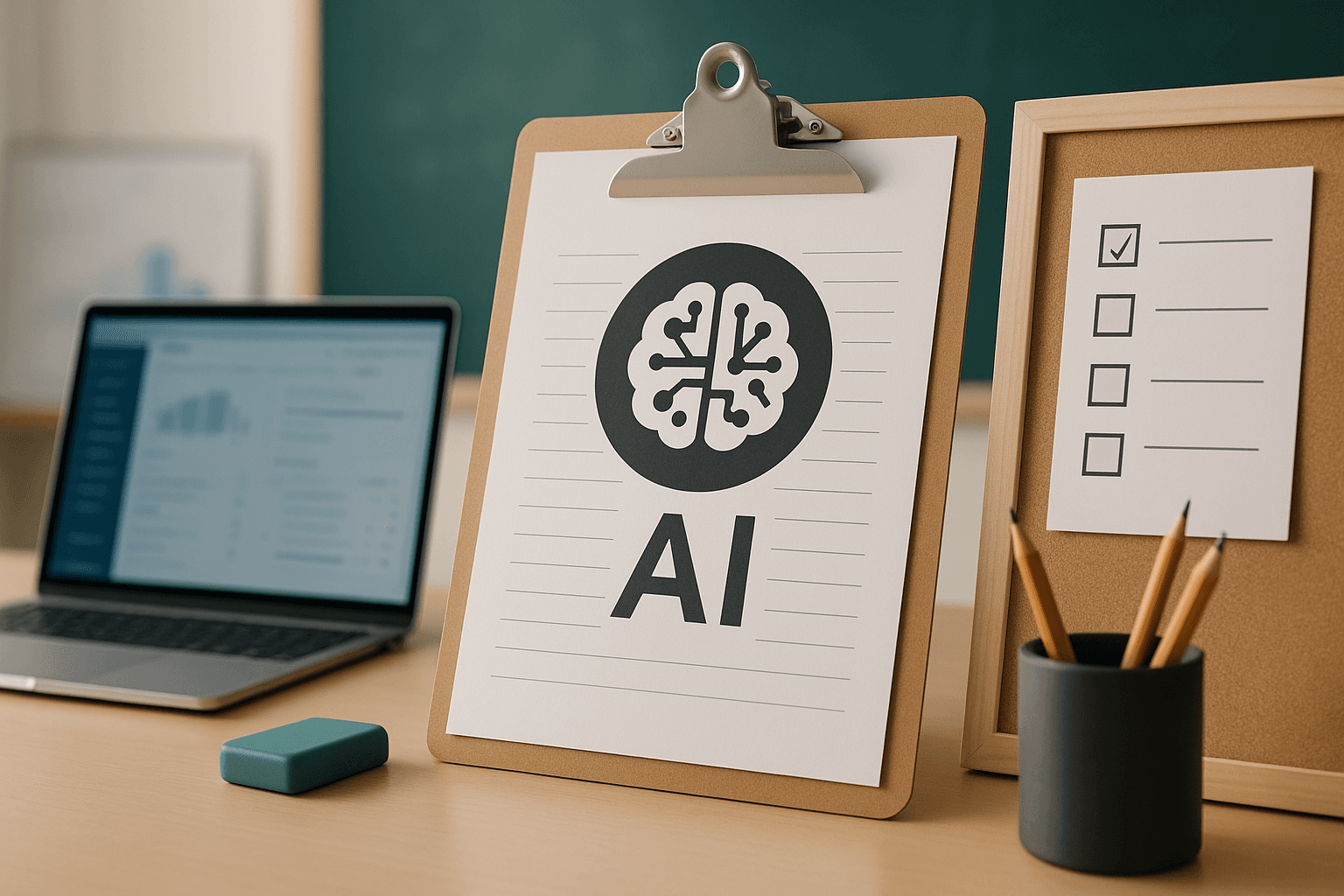
How Schools Can Introduce AI Without Encouraging Cheating
A practical school guide for introducing AI responsibly through policy, teacher training, assignment redesign, student disclosure, and project-based learning.
Read next
AI Curriculum for Nigerian Schools: What Students Should Actually Learn
A practical AI curriculum guide for Nigerian school owners, principals, and administrators who want real student outcomes instead of theory only.
Read next
Future-Proofing Your Classrooms: How to Give Your School the Practical AI Advantage
A practical guide for school leaders on introducing AI education without technical friction, while preserving student privacy and building real-world skills.
Read next