

If you searched for open ai academy, you are probably trying to find OpenAI's official learning platform—not a similarly named private training website. The official name is OpenAI Academy, and it offers courses, events and self-serve resources for learning how to use artificial intelligence in practical situations.
As of August 15, 2026, its core Academy courses are free and available globally to anyone with a ChatGPT account. That includes learners in Nigeria. You do not need a technical background, an employer-sponsored workspace or previous coding experience to begin. However, there is an important distinction between an Academy course-completion certificate and a formal OpenAI Certification.
What is Open AI Academy?
OpenAI Academy is OpenAI's official AI learning programme. It is designed to help people use AI more confidently in work, education and everyday life. Its learning options include structured courses, practical guides, live or recorded sessions and community spaces.
The Academy initially focused more heavily on developers and mission-driven organisations. OpenAI subsequently expanded it into a public, free online hub for broader AI literacy, including resources for students, educators, job-seekers, nonprofit leaders, small-business owners and technical builders.
This means it is not simply a prompt library or a collection of promotional videos. Its strongest materials teach a progression:
- Understand what AI and large language models can and cannot do.
- Give ChatGPT clearer instructions and relevant context.
- Evaluate outputs instead of accepting them automatically.
- Turn useful prompts into repeatable workflows.
- Direct more structured agent-based tasks while maintaining human review.
It is also not a university, degree programme or guaranteed route to employment. Think of it as an official foundation that can improve your AI fluency. You must still practise, build evidence of your skills and learn the requirements of your chosen field.
What courses are available?
The current core pathway contains three self-paced courses. According to the official OpenAI Academy course guide, each course uses hands-on activities and can provide a course-completion certificate when its requirements are completed.
| Course | Best for | Main outcome | Estimated time |
|---|---|---|---|
| AI Foundations | Complete beginners | Understand AI, prompting, context, output review and responsible use | 60–75 minutes |
| Applied AI Foundations | People with basic ChatGPT experience | Convert an individual task into a repeatable, reviewable workflow | 75–90 minutes |
| Agents and Workflows | Confident AI users | Direct structured agent tasks, set boundaries and refine reusable workflows | 75–90 minutes |
Taken back-to-back, the core pathway requires roughly three and a half to four and a quarter hours. Real completion time may be longer if you pause to perform the exercises properly—which is usually more valuable than rushing to collect the certificate.
AI Foundations
Start here if terms such as generative AI, large language model, context or hallucination are still unclear. The course focuses on choosing a real task, writing useful instructions and checking the response before using it.
A Nigerian student might practise turning class notes into revision questions while checking every answer against the approved textbook. A small online vendor could practise drafting product descriptions, while a job-seeker might build a process for comparing a vacancy with an existing CV without fabricating qualifications.
Applied AI Foundations
This course addresses a common problem: people learn isolated prompt tricks but cannot reproduce the result consistently. It teaches you to break recurring work into stages, decide where ChatGPT is useful and create review points.
For example, “write an Instagram caption” is a one-off instruction. A workflow is more structured: collect product details, define the audience, generate three angles, check claims, adapt the chosen version to the brand voice and obtain human approval before publication.
Agents and Workflows
The advanced core course introduces structured work with AI agents. The goal is not to hand over uncontrolled authority to a machine. You learn to provide context, define expected outputs, set boundaries, inspect drafts and improve the process.
After completing it, technical learners who want to build more robust applications or automations can explore Prompt to Profit Advanced for a path from basic prompting towards production-ready AI workflows and products.
How to join Open AI Academy from Nigeria
Go to the official OpenAI Academy website rather than relying on an advert, forwarded message or similarly named domain. You may browse available material without signing in, but you need a ChatGPT account to enrol, save progress and receive an eligible course-completion certificate.
- Visit the official Academy website.
- Review the available courses and choose the appropriate level.
- Select the enrolment option for the course.
- Sign in using your ChatGPT account.
- Confirm that you are using the email address you want connected to your learning record.
- Complete the lessons, exercises and any required course activities.
- Check your profile or course area for your completion record and certificate.
OpenAI Academy uses a platform called Gradual to manage parts of enrolment, saved progress and course-completion certificates. This is why the experience may look different from the normal ChatGPT interface. If progress disappears or a certificate is attached to the wrong account, first confirm the email address used to sign in.
For learners managing limited connectivity, avoid treating the programme as a video marathon. Complete one section at a time, keep concise notes and practise on a small real-world task. For live events, confirm the listed time zone and convert it to West Africa Time before setting a reminder.
Are the courses really free?
Yes. OpenAI states that the core Academy courses are free and do not require a paid workplace membership. You still need an internet connection and a ChatGPT account to start a course and preserve your progress.
Be careful with websites or individuals claiming that you must pay them to unlock the official Academy's core courses. A trainer may legitimately charge for separate coaching, local support or an independent programme, but that should not be presented as a mandatory OpenAI Academy enrolment fee.
OpenAI Academy certificate versus OpenAI Certification
This distinction is essential because outdated posts and exaggerated social-media claims often use “certificate” and “certification” as though they mean the same thing.
| Feature | Academy course-completion certificate | OpenAI Certification |
|---|---|---|
| What it confirms | You completed an eligible Academy course | You completed the requirements of a separate credential programme |
| Core Academy availability | Globally available to learners with a ChatGPT account | Depends on the certification programme and rollout |
| Formal credential | No; OpenAI says it is not an OpenAI Certification | Yes, where an official credential is awarded |
| Employment guarantee | No | No automatic employment guarantee |
The OpenAI Certified app in ChatGPT is currently available only to invited ChatGPT Enterprise and Edu workspaces. It uses Coursera for supported learning experiences and Credly for eligible credentials. That limited app rollout should not be confused with the globally accessible Academy courses.
You can list an Academy certificate on your CV or LinkedIn profile, but describe it accurately—for example, “Completed OpenAI Academy AI Foundations.” Do not write “OpenAI-certified AI engineer” when you only completed an introductory Academy course.
Is OpenAI Academy worth taking?
It is worth taking if you want an official, beginner-friendly foundation and are willing to practise. Its advantages include:
- First-party guidance: the material comes from the organisation developing ChatGPT and related OpenAI tools.
- Low barrier to entry: the core courses are free, short and do not require coding.
- Practical progression: the pathway moves from basic prompts to repeatable workflows and agent-based work.
- Flexible study: self-paced lessons are easier to fit around school, work or business responsibilities.
- Proof of completion: eligible courses provide a certificate, provided you use the correct account and meet the requirements.
Its main limitation is that completing a short course is not the same as developing professional competence. Watching a workflow demonstration does not prove that you can safely apply it to a real business, school or organisation.
The Academy is therefore best used as a starting point rather than a finishing line. The real question is not, “How many videos did I watch?” It is, “What useful process can I now perform more accurately or efficiently?”
How to turn the lessons into a usable AI skill
Choose one recurring problem from your current life or work. Do not begin with a vague ambition such as “become an AI expert.” A good practice project has a clear input, output and review method.
1. Define the task
Examples include preparing weekly social posts for a small business, converting meeting notes into action items, producing quiz questions from teacher-approved material or organising customer enquiries into categories.
2. Establish the quality standard
Write down what a correct result must contain. A business proposal may require an accurate scope, delivery date, exclusions and professional tone. A lesson plan must fit the subject, class level, available time and school policy.
3. Build the prompt in layers
Provide the role, objective, context, source material, constraints, output format and quality checks. Do not expect a two-line prompt to handle a complicated process reliably.
4. Add human review
Check names, figures, calculations, quotations, references and claims. Never submit confidential customer, patient, employee or student information merely because a course exercise encourages experimentation. Use anonymised or fictional practice data when necessary.
5. Save the workflow and evidence
Keep the final prompt, checklist, sample input, sample output and a short explanation of what you improved. This becomes a small portfolio case study rather than an unsupported claim that you “know AI.” Our resource library can also help you organise practical templates and learning materials.
6. Adapt it to your field
A teacher, school owner or administrator should combine AI skills with safeguarding, privacy, academic-integrity rules and human oversight. Schools exploring structured adoption can review our AI for Schools programme rather than allowing uncoordinated tool use.
A freelancer or entrepreneur should connect AI to a specific service outcome: faster research preparation, clearer content briefs, structured customer-support drafts or better-organised business documents. The value comes from solving a defined problem, not merely having access to ChatGPT.
A practical seven-day learning plan
- Day 1: Enrol in AI Foundations and choose one genuine recurring task for the exercises.
- Day 2: Finish the course and rewrite your original prompt using clearer context and constraints.
- Day 3: Test the prompt with three different inputs. Record where the output becomes inaccurate or inconsistent.
- Day 4: Begin Applied AI Foundations and divide the task into repeatable stages.
- Day 5: Create a human-review checklist covering factual accuracy, tone, privacy and required formatting.
- Day 6: Produce one polished before-and-after example using non-confidential information.
- Day 7: Write a short case study explaining the problem, process, review method and final result.
This plan gives you something more useful than a certificate alone: evidence that you can apply the lessons deliberately.
Important limitations and cautions
- Course content can change. AI products evolve quickly, so verify current features in official documentation.
- AI output can be wrong. A confident response is not proof of accuracy.
- Do not expose sensitive data. Follow your employer's, school's or organisation's policies before using real records.
- A certificate is not job experience. Combine it with projects, domain knowledge and demonstrable communication skills.
- Free learning still requires discipline. Passive video consumption will not build reliable workflow-design skills.
- Beware of income guarantees. AI skills can support useful services and products, but demand, quality, positioning and execution still matter.
OpenAI Academy or a structured practical course?
| Choose OpenAI Academy when you need | Consider structured training when you need |
|---|---|
| An official introduction to ChatGPT and AI workflows | Feedback on your own prompts and projects |
| Free, self-paced foundational learning | Deadlines, accountability and guided practice |
| A broad understanding of OpenAI tools | Help adapting AI to a Nigerian business, career or market |
| A course-completion certificate | A portfolio, offer or implementation plan |
The two options are not competitors. You can complete the official Academy foundation first and then choose focused training if you need support turning the knowledge into a working service, business process or product.
Frequently asked questions
Is Open AI Academy legitimate?
Yes, provided you use the official OpenAI Academy website. Check the domain carefully because unrelated websites may use similar versions of the name.
Is OpenAI Academy available in Nigeria?
Yes. OpenAI says its core Academy courses are available globally to anyone with a ChatGPT account. Nigerians can take the self-paced online courses, although individual live or in-person events may have their own location, registration or scheduling requirements.
Do I need to pay for ChatGPT Plus?
The official course guide says the Academy courses are free and do not require a workspace membership. It does not state that ChatGPT Plus is required to enrol in the core pathway.
Do I need coding experience?
No. The three core courses do not require a technical background. Some additional Academy resources and builder events cover more advanced subjects such as APIs, coding and production AI applications.
Will I receive a certificate?
You can receive a course-completion certificate after completing an eligible Academy course. You must sign in with the ChatGPT account you want associated with your progress and certificate.
Is the certificate the same as OpenAI Certification?
No. OpenAI explicitly distinguishes Academy course-completion certificates from its formal certification programmes. Use the correct description on your CV and professional profiles.
Can an OpenAI Academy certificate get me a job?
No certificate guarantees employment. It can show that you completed relevant learning, but employers and clients may also look for problem-solving ability, communication, professional knowledge and evidence that you can produce reliable work.
Which course should a beginner take first?
Begin with AI Foundations. Move to Applied AI Foundations after you can write clear prompts and review responses critically. Take Agents and Workflows when you are comfortable designing multi-step processes.
Can businesses and schools use the Academy?
Yes. Individuals and organisations can access Academy courses, while the wider platform also provides specialised events and resources. Organisations should still create internal policies, approved use cases and review procedures rather than assuming a course alone provides complete governance.
Your next step
Start with the free AI Foundations course and apply every lesson to one task you already understand. By the end of the week, aim to have a tested prompt, a repeatable workflow, a review checklist and one portfolio-ready example.
If your next goal is to turn those foundations into useful outputs, services or responsible income opportunities, continue with Prompt to Profit. It provides a more structured path from learning how to prompt to applying AI to problems people and businesses genuinely need solved.
Continue reading
Related lessons for this topic
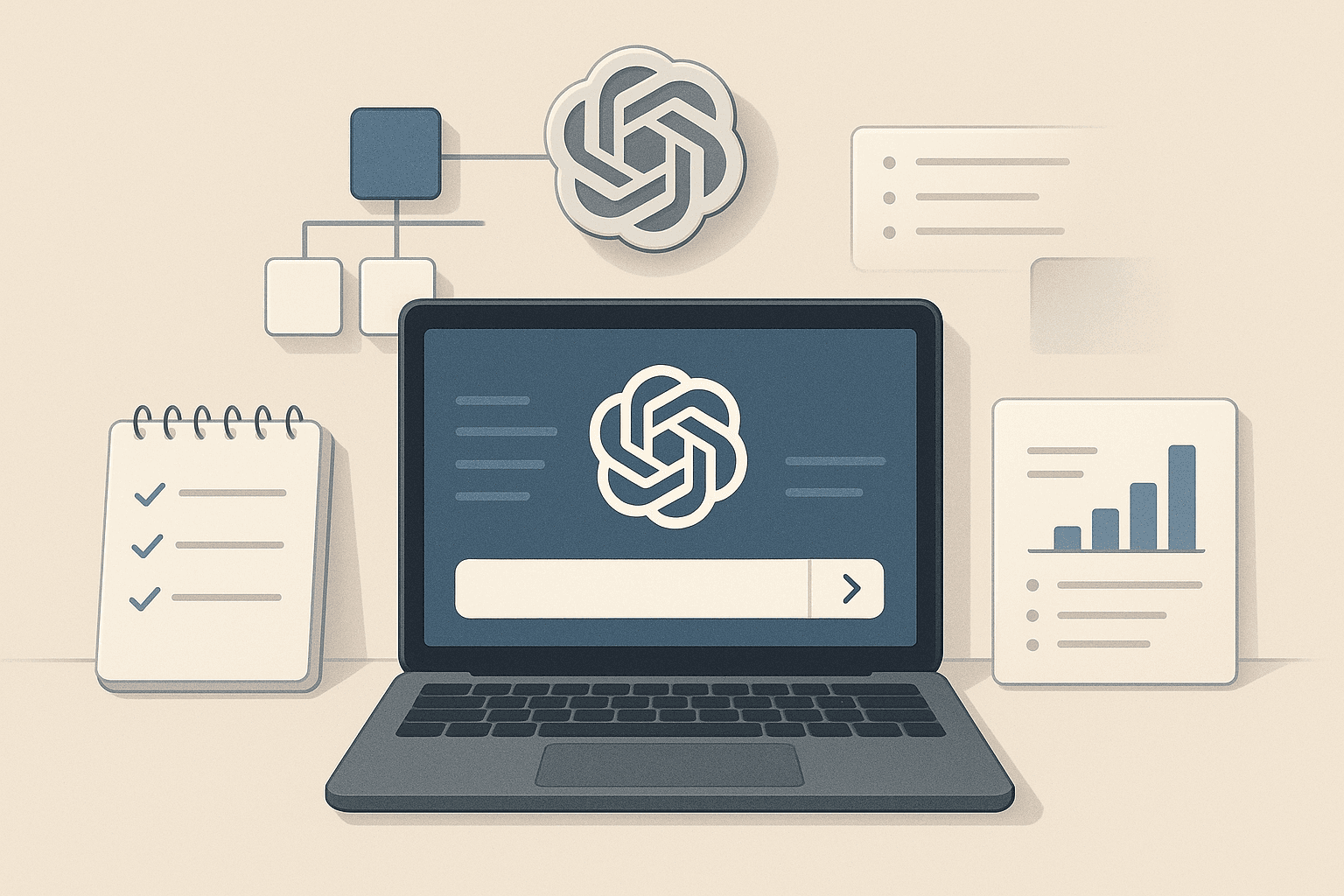
How to Use ChatGPT as a Beginner: A Practical Step-by-Step Guide
A clear beginner guide to using ChatGPT properly for learning, planning, writing, research, business tasks, and practical daily work without copying blindly.
Read next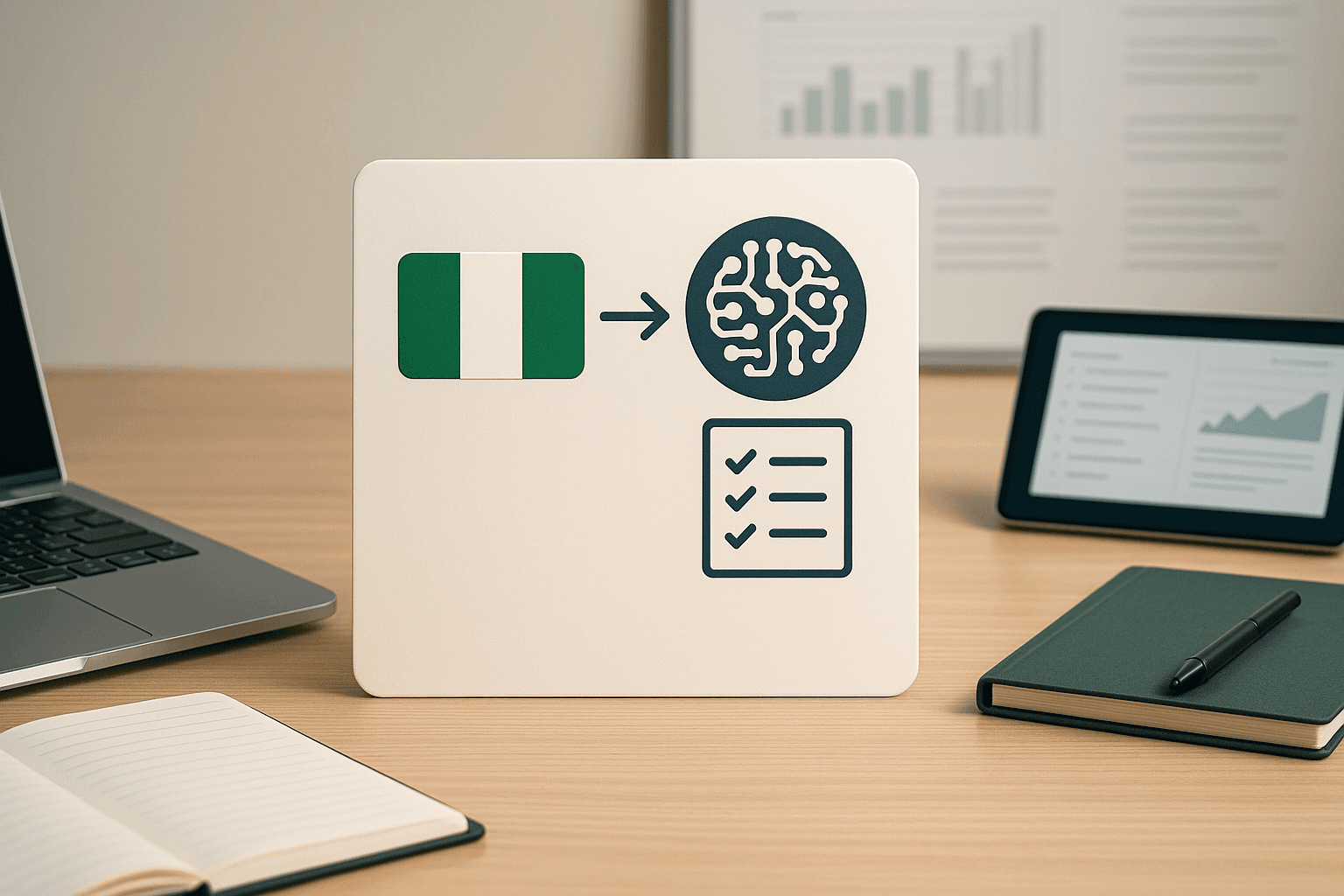
Prompt Engineering for Nigerian Students: The Skill Behind Better AI Results
A practical guide to prompt engineering for Nigerian students who want better AI results for school projects, websites, portfolios, and digital work.
Read next
ChatGPT for Nigerian Teachers: Lesson Planning and Classroom Ideas
Practical ways Nigerian teachers can use ChatGPT to plan lessons, create examples, support students, and make classroom technology more useful.
Read next