
Learning how to build a portfolio with AI projects is not mainly a design exercise. It is an evidence exercise. A polished page may attract attention, but the work behind it must prove that you can identify a useful problem, choose an appropriate method, test the result and explain your decisions.
This matters whether you are a Nigerian student seeking an internship, a professional changing careers, a developer adding AI skills or a non-technical specialist learning to build useful workflows. Certificates can show that you completed training. A strong portfolio shows what you can do when the instructions are incomplete and the result must work for someone else.
Your portfolio is an evidence file, not a trophy cabinet
A reviewer usually wants answers to five questions:
- What problem did you attempt to solve?
- Why was AI appropriate for that problem?
- What did you personally build or decide?
- How did you test whether the output was useful?
- What would you improve before real-world deployment?
Your portfolio should make those answers easy to find. Ten cloned chatbots with different colours provide less evidence than three carefully documented projects that solve different kinds of problems.
Do not compete by claiming that your model is revolutionary. Compete through clarity, judgement and proof.
Choose projects with consequence
Do not begin by asking, “Which AI tool should I use?” Begin with a situation in which a person repeatedly searches, classifies, compares, drafts, extracts or decides. The project becomes stronger when a wrong answer has a visible consequence and you can therefore define what “good” means.
| Selection test | Question to ask |
|---|---|
| Usefulness | Would a real person save effort or make a better decision with this? |
| Access | Can I legally and safely obtain suitable data or create a realistic synthetic sample? |
| Evaluation | Can I test accuracy, completeness, speed, usability or another relevant outcome? |
| Demonstration | Can a reviewer understand or try the result within a few minutes? |
| Scope | Can I finish a credible first version without pretending it is production-ready? |
For example, “build an AI chatbot” is too vague. “Build an assistant that answers questions from a fictional university department handbook, cites the relevant section and refuses questions outside the handbook” gives you a user, a knowledge boundary and testable behaviour.
Build three projects that reveal different abilities
A balanced starter portfolio does not need every fashionable model type. It needs projects that reveal different layers of competence.
1. A controlled AI workflow
Build a repeatable process in which AI handles part of a larger task. One example is a scholarship eligibility screener that converts programme requirements into structured checks and explains which information is missing. Use fictional applicant profiles rather than real student records.
This project can demonstrate prompt design, structured outputs, exception handling and human review.
2. A data-backed project
Work with a small, understandable dataset. You might create an inventory risk dashboard for a sample neighbourhood shop, using generated sales records to identify items that may need restocking. Include a non-AI baseline, such as a simple stock threshold, so reviewers can see whether the more complex approach adds value.
3. A usable AI application
Turn one idea into a small interface or application. A technician could build a tool that converts equipment fault notes into standard categories while preserving the original note for verification. A researcher could create a searchable assistant for public reports. The important step is moving beyond a notebook into something another person can operate.
Document every project with the TRACE method
The project itself is only half of the portfolio. Use the TRACE method to turn your work into a convincing case study.
Task
Name the user, situation and intended outcome. Avoid inflated descriptions. “This prototype helps a school administrator search a fictional policy handbook” is more credible than “This solution transforms education with artificial intelligence.”
Reasoning
Explain why you selected your approach. State the alternatives you considered, including a manual process or simpler rule-based system. If AI was unnecessary, say so and redesign the project. Good judgement includes knowing when not to use a model.
Artifact
Show what you produced: repository, notebook, interface, workflow diagram, sample output or short demonstration video. Identify the data source, major components and dependencies. A reviewer should not have to reverse-engineer your entire repository to understand the system.
Checks
Describe how you tested the project. For a document assistant, prepare answerable questions, ambiguous questions and questions outside the source material. Check whether the assistant cites the correct passage and admits when the material does not contain an answer. For a classifier, publish examples of correct and incorrect predictions rather than showing accuracy alone.
Evolution
End with what changed during development. Perhaps the first prompt produced confident guesses, the original categories overlapped or the interface failed on mobile devices. Show the adjustment you made and the remaining limitation. This proves that you can learn from evidence instead of hiding imperfect results.
Make your contribution visible
Using AI to write code, generate test cases or explore an interface does not invalidate a project. Concealing that use weakens your credibility.
For each project, distinguish among:
- work generated or suggested by an AI tool;
- decisions you made about scope, data and architecture;
- code or content you reviewed and modified;
- tests you designed;
- errors you found and corrected.
If an assistant produced most of the initial code, you should still be able to explain the important functions, dependencies and failure modes. Remove any component you cannot defend in a technical conversation.
Test for the conditions your users will bring
A demo that works only with your preferred examples is not strong evidence. Build a small evaluation set before polishing the interface.
Depending on the project, include misspellings, incomplete inputs, Nigerian names, naira values, mixed date formats, long documents, repeated records and requests outside the system’s intended scope. If you expect mobile users or unreliable connectivity, test the interface on a small screen and explain what happens when an external service is unavailable.
Real AI systems involve more than model output. Google’s overview of production machine learning systems highlights supporting work such as data verification, testing, serving and monitoring. Your student project may be smaller, but showing awareness of those components separates a thoughtful prototype from a one-screen demo.
Package the work for a 90-second review
Assume the first reviewer will scan rather than study. Each project card should contain a one-sentence problem, your role, the main method, one verified result and links to the demonstration and case study.
Then give the repository a useful README containing:
- the problem and intended user;
- a screenshot or short demonstration;
- setup instructions that you have tested;
- sample inputs and expected outputs;
- data provenance and privacy notes;
- evaluation method and results;
- known limitations;
- your next improvement.
GitHub allows you to add a profile README and highlight selected repositories, so pin your strongest work rather than leaving visitors to search through unfinished experiments. If your project needs an interactive machine learning demonstration, Hugging Face Spaces is one available hosting route. A recorded walkthrough is also useful when a live service may sleep, fail or require paid infrastructure.
Protect the people behind the data
Never upload customer conversations, school records, medical information, internal company files or family documents simply to make a project appear realistic. Permission to view information is not automatically permission to publish it.
Use open data, generated records or carefully anonymised samples. If the real dataset must remain private, publish its schema, a synthetic sample and your evaluation process instead. Remove API keys, passwords and private endpoints from repositories. Also inspect AI-generated examples: a model can reproduce personal details that you accidentally included in a prompt.
Credibility also means reporting results honestly. Do not describe a prototype as deployed, label generated feedback as user research or claim time savings you did not measure.
A four-week portfolio build plan
- Week one: define. Choose one user and one narrow problem. Gather safe data, write success criteria and create a simple baseline.
- Week two: build. Produce the smallest working version. Keep a decision log and save failed approaches that teach something useful.
- Week three: challenge. Create test cases, invite two or three people to try the project and fix the most important failure patterns.
- Week four: publish. Clean the repository, write the TRACE case study, record a short walkthrough and add the project to your portfolio.
If you need starting materials while planning your build, explore the Academy’s practical AI resource library. If a promising project remains stuck between idea and working prototype, private AI build coaching can help you clarify the architecture, scope and next implementation step.
Review the evidence before you publish
- Can a stranger identify the user and problem immediately?
- Is AI necessary, or did you add it for appearance?
- Have you shown your own decisions and contribution?
- Can another person run or view the project?
- Did you test difficult and out-of-scope inputs?
- Are the data, results and limitations described honestly?
- Have you removed confidential information and secrets?
The best AI portfolio is not the one with the most projects or the most advanced terminology. It is the one that consistently shows a useful problem, a defensible approach, visible testing and responsible human judgement. Build fewer projects, examine them more deeply and publish the evidence that proves you understand your own work.
Continue reading
Related lessons for this topic
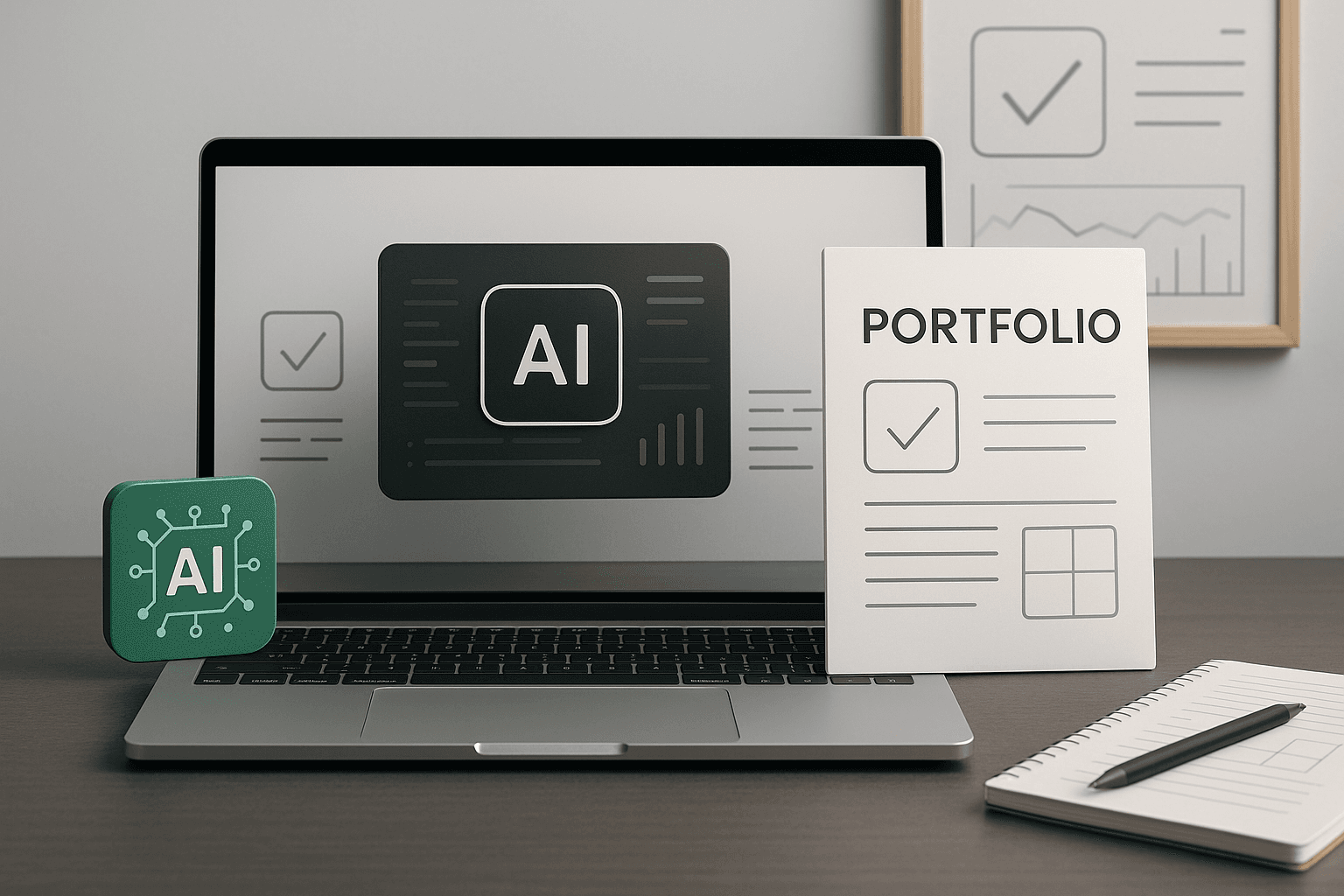
AI Skills for Nigerian Teenagers: Building a Portfolio Before University
Why Nigerian teenagers should use AI to build portfolios, websites, and practical digital projects before university or their first serious opportunity.
Read next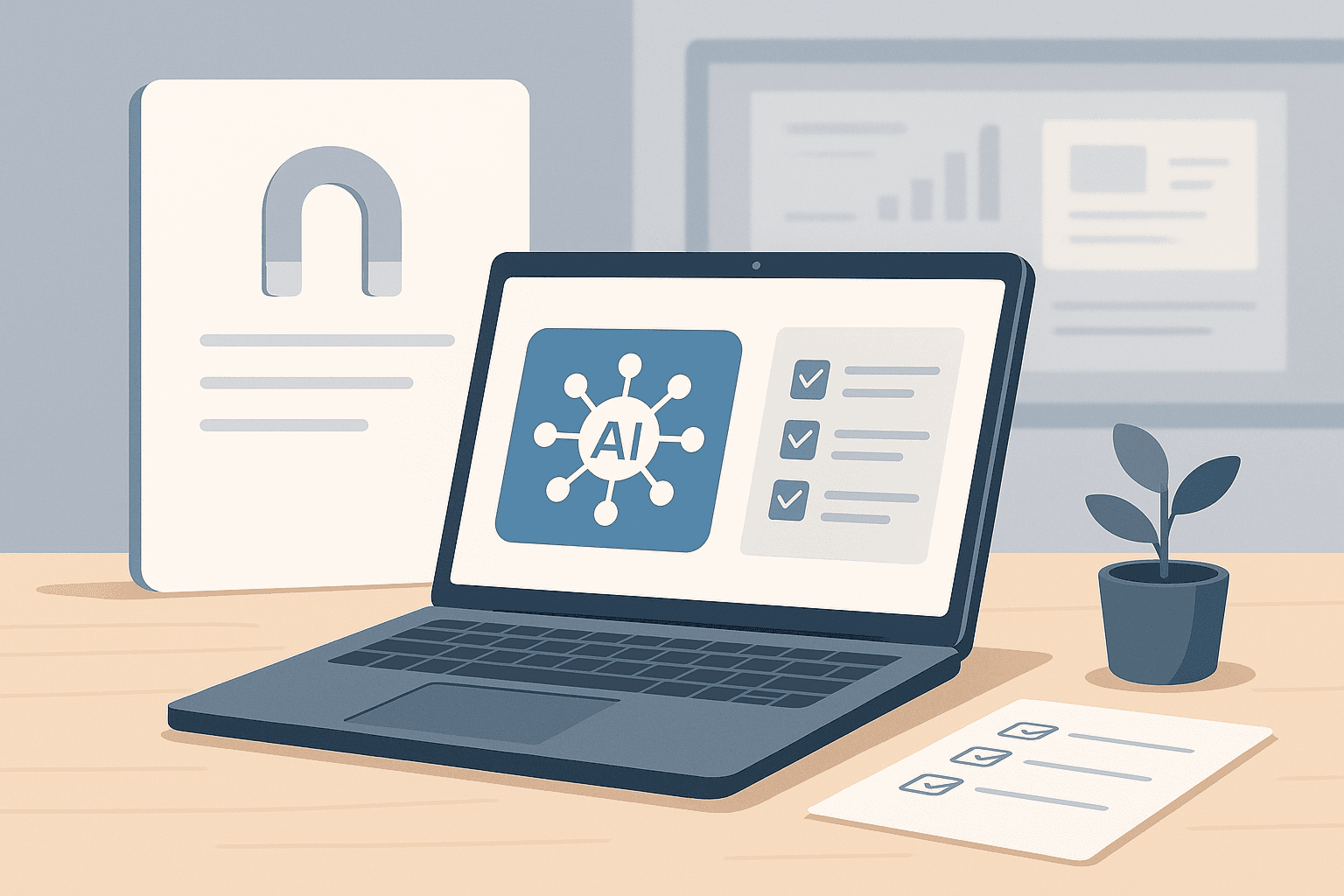
How to Build a Simple AI-Powered Lead Magnet
A practical guide to creating an AI-assisted lead magnet that attracts the right audience, delivers real value, and connects naturally to a paid offer.
Read next
How to Turn AI Skills Into Practical Income Opportunities
A realistic guide to turning AI skills into income by solving specific problems, packaging services, building proof, and selling practical outcomes.
Read next