

ChatGPT can help students learn, but it can also help them avoid learning. The difference is how it is used.
If a student uses ChatGPT to explain a difficult idea, generate practice questions, review a draft, or plan revision, it can be useful. If the student uses it to produce answers they do not understand, it becomes harmful.
This guide explains what is helpful, what is harmful, and how students can use AI responsibly. For structured beginner AI skills, Prompt to Profit is a practical path.
Helpful: asking for explanations
Students can use ChatGPT to understand topics that feel confusing.
Good prompt:
"Explain [topic] to me as a beginner. Use a simple example, then ask me three questions to check my understanding."
Better follow-up:
"I do not understand the second part. Explain it another way using an everyday example."
This is helpful because the student is trying to understand, not escape the work.
Harmful: asking for finished answers
Bad prompt:
"Write my assignment on [topic]."
This may produce a polished answer, but the student learns little. It can also violate academic rules.
A better prompt is:
"Help me create an outline for this assignment. Ask me questions about what I already understand before suggesting a structure."
The student should still do the thinking and writing.
Helpful: creating practice questions
AI can act like a practice partner.
Prompt:
"Quiz me on [topic] one question at a time. Wait for my answer. If I am wrong, explain the mistake and give me a similar question."
This is one of the strongest student uses because it makes the learner active.
Harmful: using AI before trying
If students use AI before making any attempt, they can become dependent. The better rule is: try first, ask second.
A good process:
- read the question
- write what you understand
- attempt the answer
- ask AI for feedback or explanation
- revise in your own words
- check with class notes or sources
This process builds skill.
Helpful: feedback on drafts
Students can ask AI to review work without rewriting it.
Prompt:
"Review my draft. Do not rewrite it. Tell me what is unclear, what needs stronger evidence, and what question a teacher might ask."
This keeps ownership with the student.
Harmful: hiding AI use
If a school requires disclosure, students should disclose AI help. Hiding AI use can damage trust and may count as academic misconduct.
A simple disclosure can say:
- I used ChatGPT to understand the topic
- I used it to create practice questions
- I used it to review my draft
- I verified the final claims with class notes or sources
Honesty is part of responsible AI use.
Helpful: summarizing notes
AI can turn messy notes into cleaner study material.
Prompt:
"Turn these notes into a study guide with headings, key points, definitions, examples, and practice questions: [notes]."
Students should use their own notes where possible. Summarizing a textbook chapter without reading it is not the same as learning.
Harmful: trusting AI blindly
AI can be wrong. It can invent sources, simplify incorrectly, or miss important context.
Students should verify:
- historical facts
- scientific claims
- formulas
- quotes
- statistics
- dates
- source names
- anything used in an assignment
Prompt:
"List the claims in this answer that I should verify before using them."
Helpful: project planning
AI can help students plan projects, presentations, websites, and portfolios.
Prompt:
"Help me plan a student project on [topic]. Include research questions, project structure, tasks, timeline, and what I should present at the end."
For students interested in practical AI projects, read How to Build a Website With ChatGPT Without Coding.
Harmful: losing your own voice
If every student submits AI-polished writing, their voice and thinking become harder to see. Students should use AI to improve clarity, not erase themselves.
Prompt:
"Help me make this paragraph clearer while keeping my original meaning and voice. Do not make it sound too formal."
Helpful: learning prompt skill
Prompting is a skill. Students should learn to provide context, ask for examples, request feedback, and challenge output.
A strong prompt includes:
- task
- context
- level
- format
- constraints
- examples if needed
This skill will matter in school, work, and business.
A responsible student AI routine
Use this routine:
- attempt the task yourself
- ask AI for explanation or feedback
- compare with trusted sources
- rewrite in your own words
- disclose use where required
- reflect on what you learned
This makes AI a learning tool instead of a shortcut.
FAQ
Is ChatGPT bad for students?
Not by itself. It depends on use. Explanation and practice can help; copying harms learning.
Can students use ChatGPT for homework?
Only within school rules and in ways that support learning rather than replace it.
Should students disclose AI use?
Yes, especially when the school requires it or when AI shaped the work.
Where can students learn practical AI skills?
Start with Prompt to Profit for beginner-friendly practical AI work.
Helpful: comparing your answer with a model answer
Students can learn by comparing their own work with a stronger example.
Prompt:
"Here is my answer. Create a model answer to a similar question, not the same question. Then explain what makes the model answer stronger: [student answer and topic]."
This avoids simply copying the final answer while still helping the student improve.
Harmful: using AI to avoid reading
AI summaries can be useful after reading, but harmful when they replace reading entirely. If a teacher expects students to understand a chapter, poem, case study, or source, a summary alone may miss tone, detail, and context.
A better prompt is:
"I have read this section. Ask me questions to check whether I understood the main ideas, details, and implications: [notes]."
This makes AI a study partner.
Helpful: planning revision based on weak areas
Students can use AI to focus revision.
Prompt:
"Here are the topics I struggle with and the time I have before my test. Create a revision plan that prioritizes weak areas and includes practice questions: [topics and time]."
Good revision is not equal time on everything. It focuses effort where learning is weakest.
Harmful: fake confidence
AI can make weak understanding sound polished. That is dangerous because students may think they know a topic when they only recognize words.
Students should test themselves without looking at AI output. If they cannot explain the idea in their own words, they need more practice.
Helpful: preparing questions for teachers
Students sometimes know they are confused but cannot explain what they do not understand. AI can help them prepare better questions.
Prompt:
"I am confused about [topic]. Help me identify what I do not understand and write three clear questions I can ask my teacher."
This is a responsible use because it improves classroom participation.
Harmful: using AI to sound smarter than you are
Students may be tempted to submit work with vocabulary and structure far beyond their normal level. That can create suspicion and, more importantly, it hides what the student actually understands.
A better prompt is:
"Make my writing clearer, but keep it at my level and preserve my voice. Explain the changes you suggest."
The goal is improvement, not disguise.
Helpful: building study confidence
Some students avoid subjects because they feel behind. AI can help create a lower-pressure practice environment.
Prompt:
"Help me practise [topic] from an easy level and increase difficulty slowly. Encourage me to try before showing answers."
Used this way, AI can reduce fear and increase practice time.
Continue reading
Related lessons for this topic
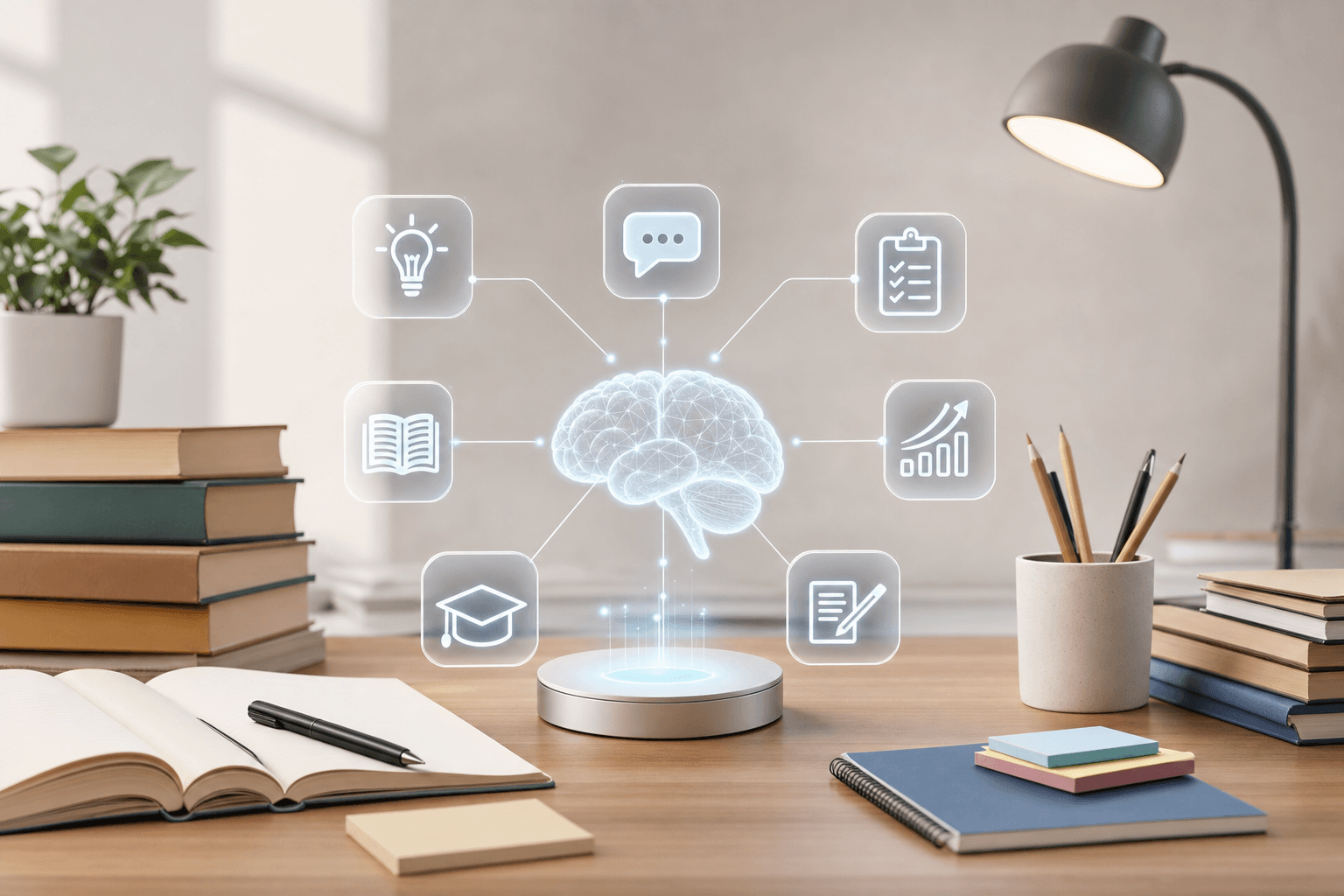
How Students Can Use AI to Study Without Copying
A practical study guide showing students how to use AI for explanation, quizzes, revision plans, feedback, and understanding without copying answers.
Read next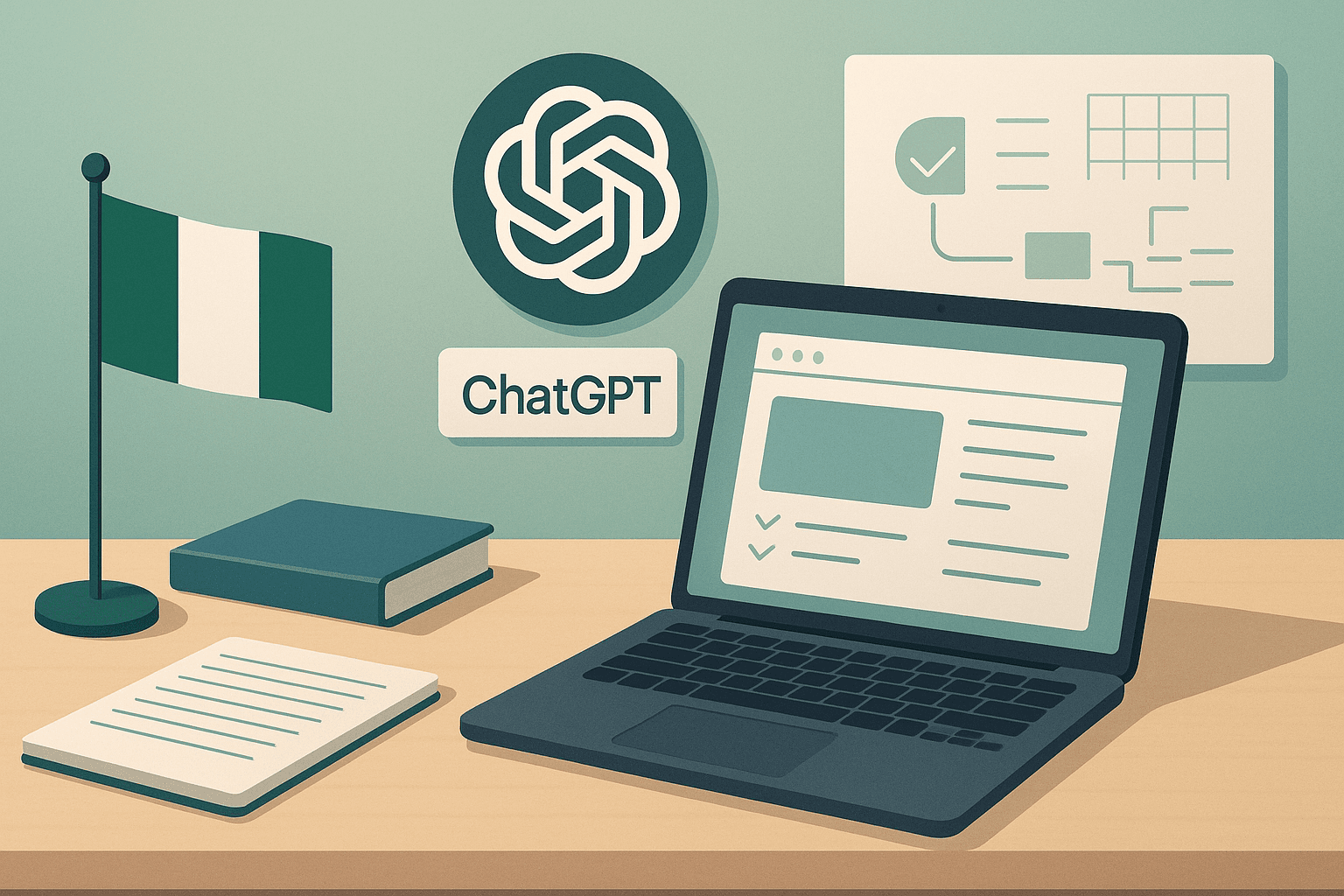
How Nigerian Students Can Build Websites With ChatGPT Without Coding
A beginner-friendly guide for Nigerian students who want to use ChatGPT to build real websites, portfolios, and project pages without coding experience.
Read next
How Parents Can Guide Children Using AI at Home
A practical guide for parents who want to help children use AI for learning, creativity, study, and projects without encouraging copying or unsafe habits.
Read next